
What You Get
Every engagement begins with the Marketing Diagnostic and builds from there, into work your team can act on and a relationship that deepens over time.
From Insight to Impact
01
We study your business, category, and competitors, then give you a clear read of where you stand and where to focus first.
You start with a shared understanding.
Review a sample →02
Together we agree which challenges matter most, and in what order. Essentials clients choose from the menu; Advisor and Executive priorities are set in conversation.
Effort goes where it matters most.
Consider challenges →03
Each output is built for your business and delivered in a form your team can act on right away.
Strategy you can put to work.
View sample pages →04
A senior executive reviews every piece before it reaches you. Questions, revisions, and follow-ups are part of the process, within your agreed scope.
Decisions made with confidence.
See our standard →05
Each piece informs the next, so the guidance sharpens the longer we work together.
Value that compounds over time.
Learn how it builds →01
Where every engagement begins
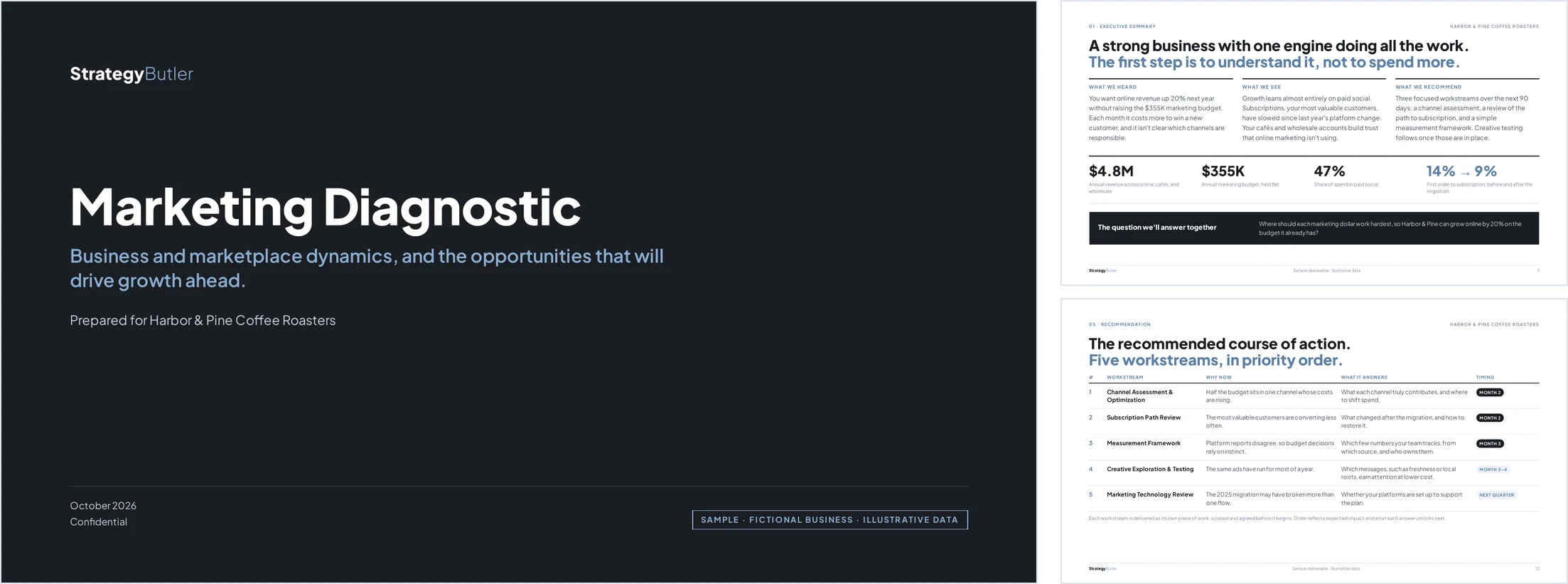
Your business reflected back to you, set against your category and competitors, with early insights and a recommended course of action. A complete sample for a fictional specialty coffee roaster, written to the same standard as client work.
01
What we heard, what we see, and the recommended path, on a single page.
02
Your goals and challenges in your own words, plus your category, competitors, spending, and where you stand apart.
03
Early insights, what would confirm them, and where our priorities align or remain open.
04
A ranked course of action and a 90-day roadmap. The right questions, in the right order.
05
The decisions that show the plan is working, and who on your team owns each number.
06
Sources and references, so every conclusion can be checked.
02
Choose the focus
No brand or business has all of the answers, and those that think they do are likely not evolving to meet the expectations and needs of customers in the modern world. All marketers should be asking these questions repeatedly as they continually optimize their marketing and approach.

Understand your market
Clarity on your competitors, your customers, and how they find, choose, and stay with you.
Answers
You receive
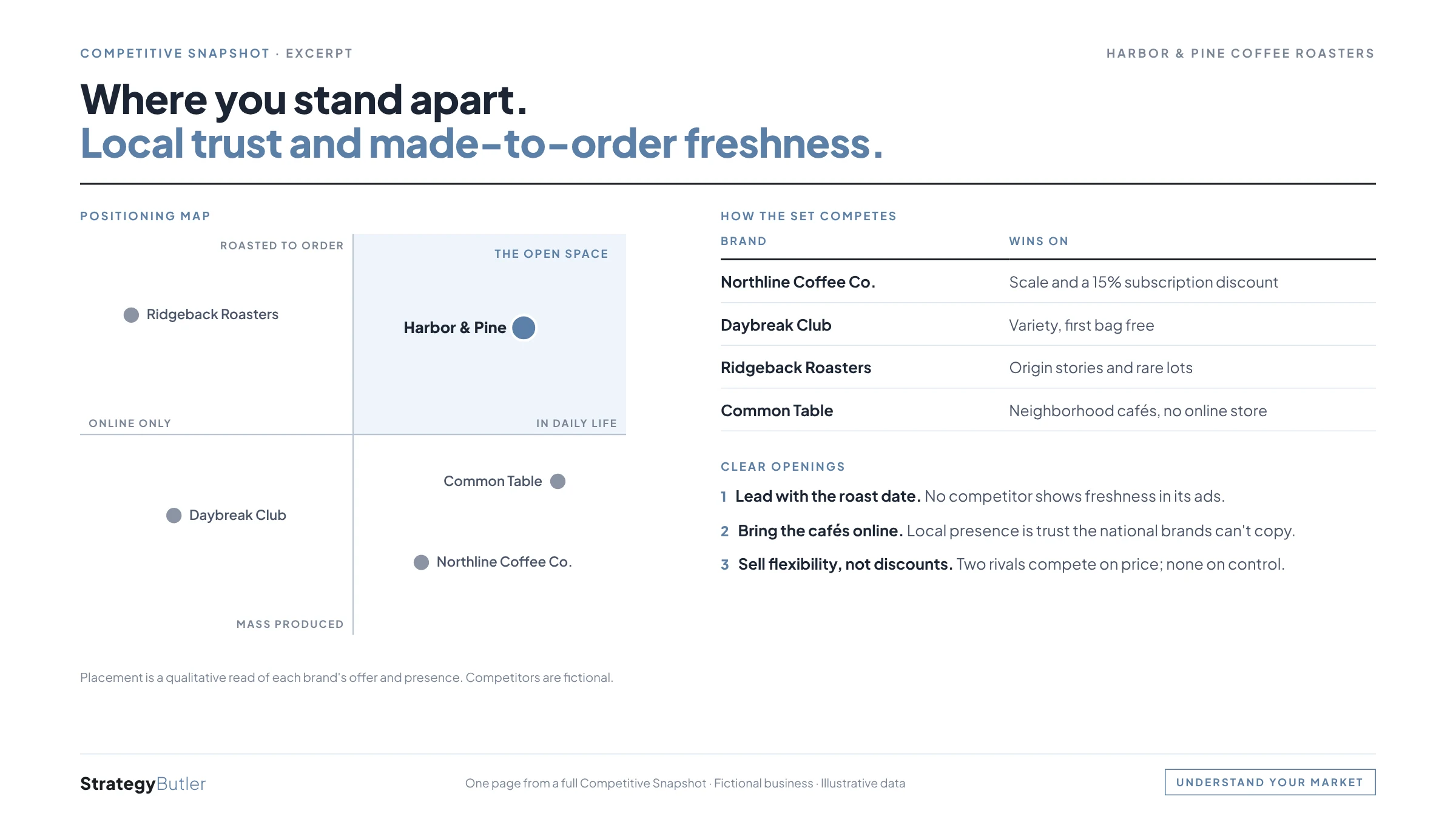
A written assessment with a positioning map and clear openings.
Use it to
Sharpen your message and choose where to compete.
Answers
You receive
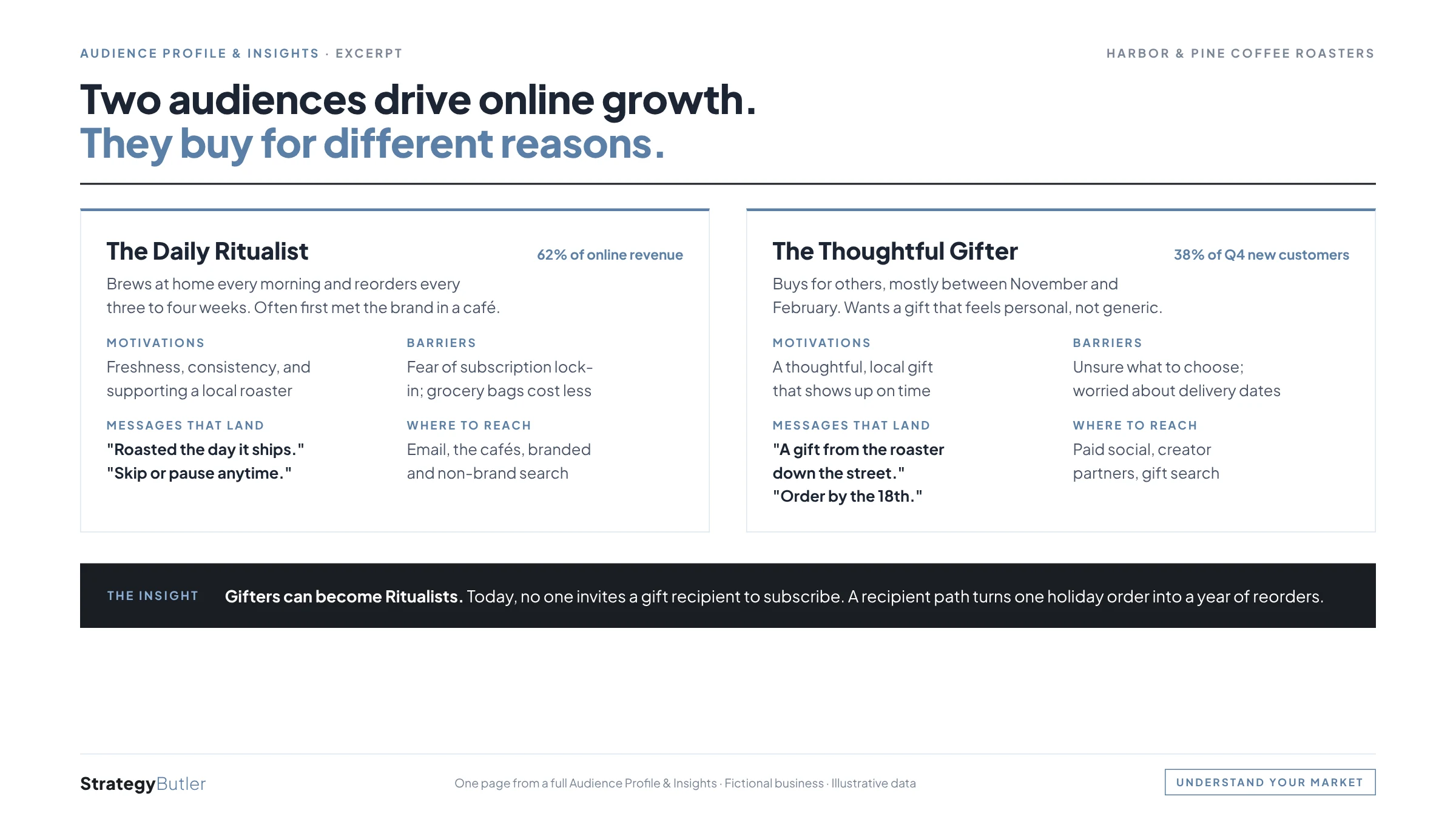
Audience profiles with motivations, barriers, and the messages that land.
Use it to
Brief creative, target media, and prioritize channels.
Answers
You receive
A mapped journey with gaps, friction points, channel roles, and ranked fixes.
Use it to
Fix the leaks before spending more to fill the top.
Answers
You receive
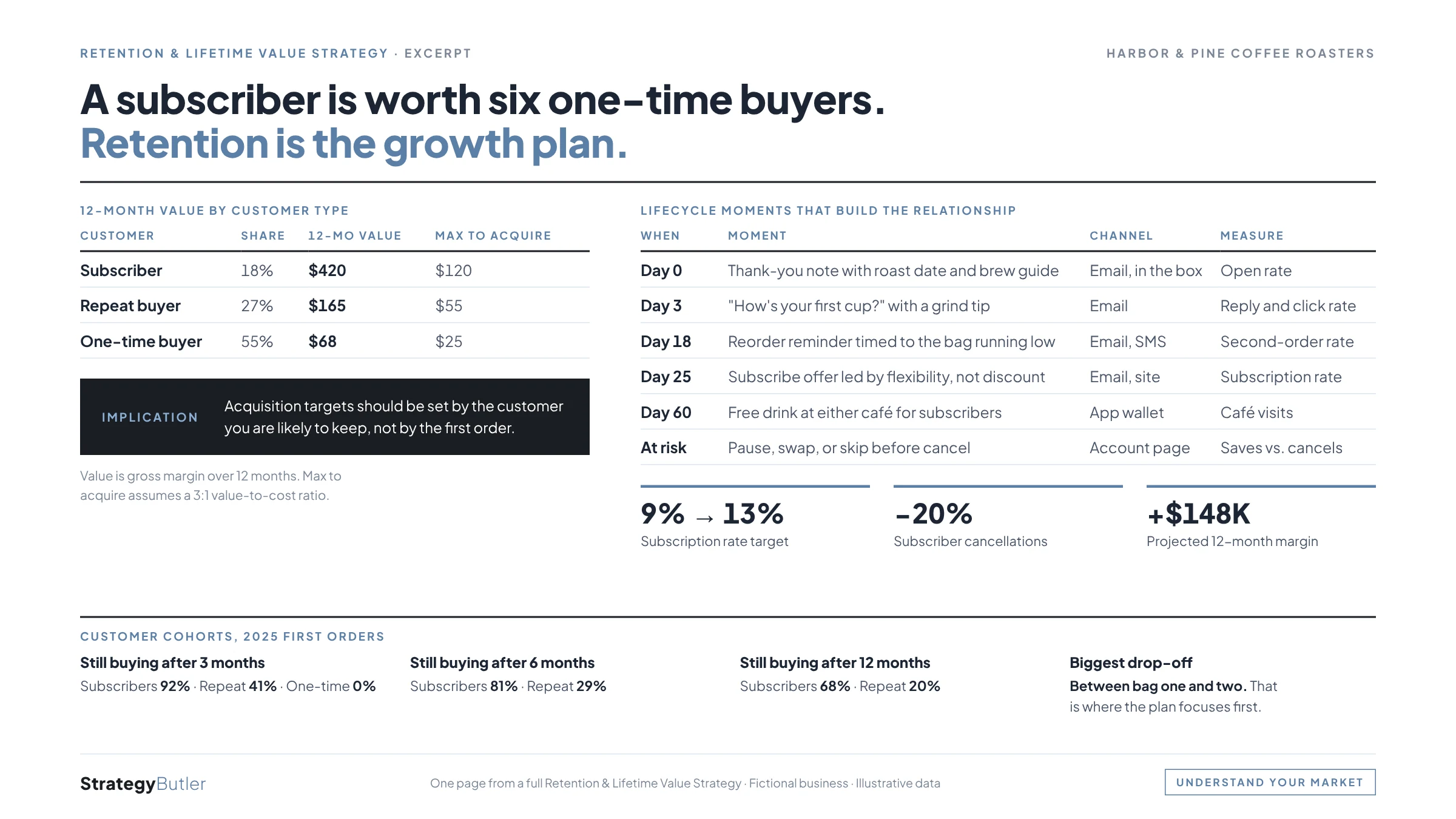
A retention plan with priority segments, lifecycle moments, channel roles, and lifetime value measures.
Use it to
Grow revenue from the customers you already have.
Answers
You receive
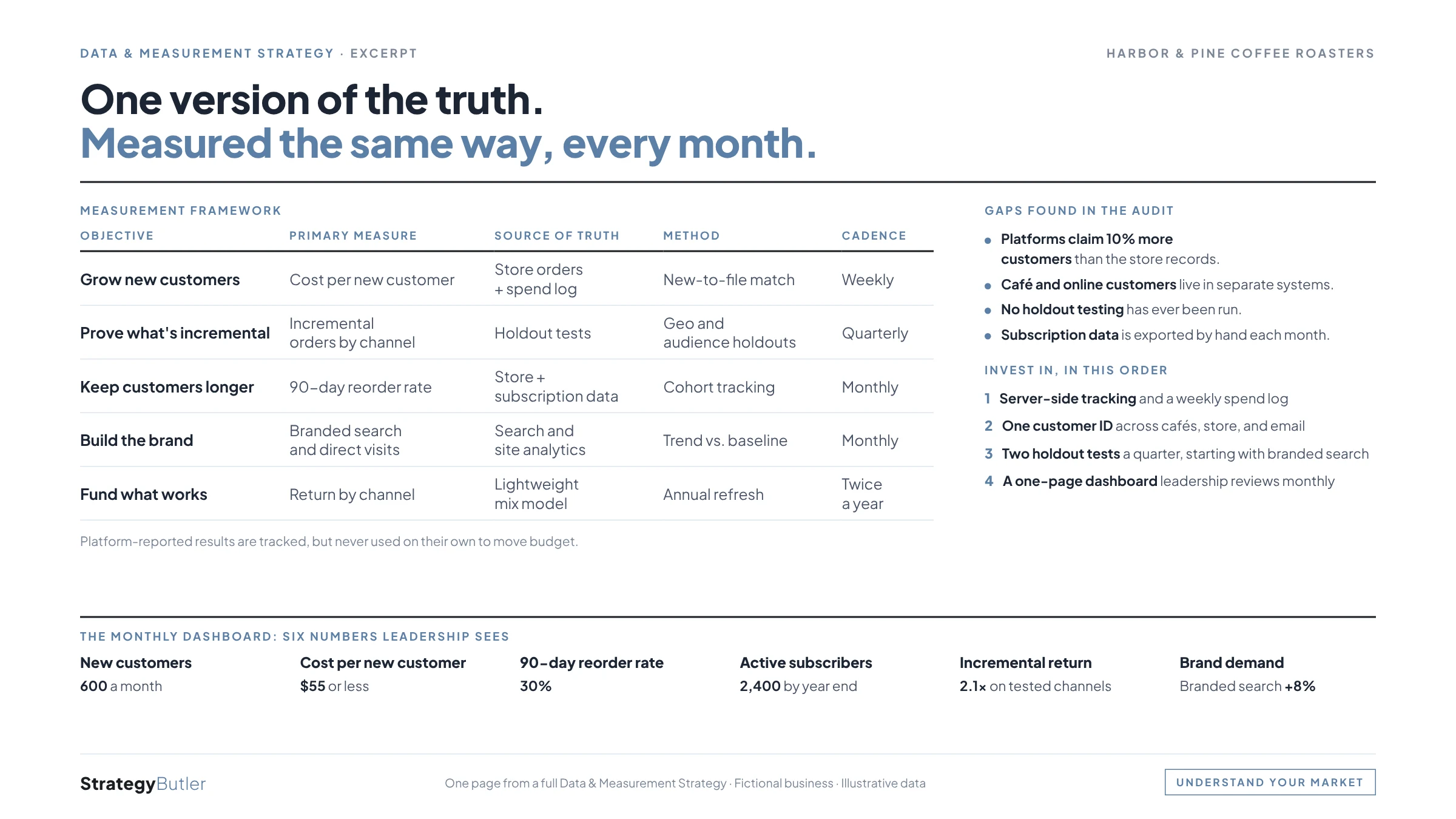
A data and measurement plan with priorities, a measurement framework, and recommended tools.
Use it to
Make decisions on evidence, and know what is actually driving results.

Define your brand and message
A clear position, a consistent look and story, and direction your team or partners can execute against.
Answers
You receive
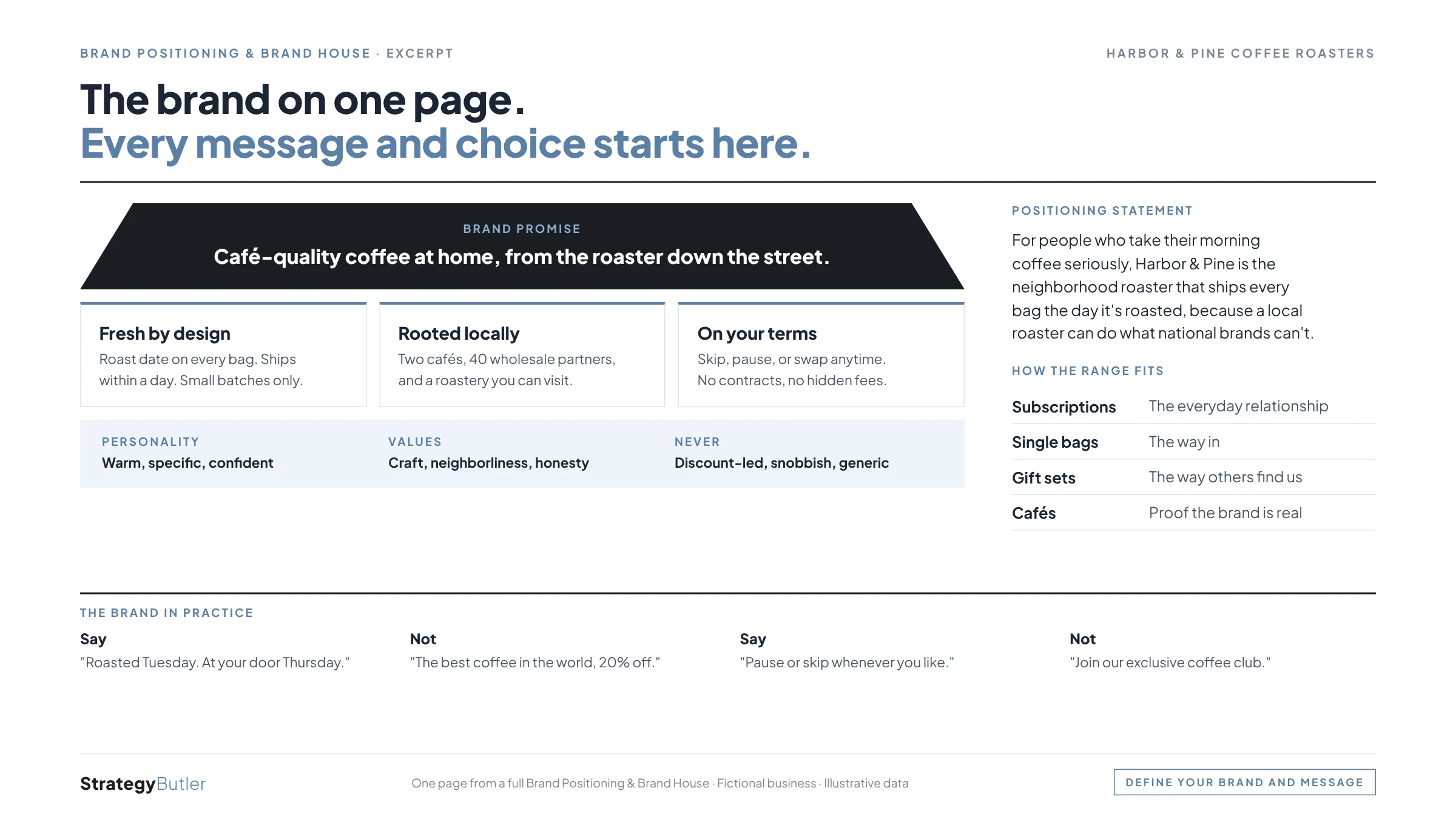
A positioning statement and a one-page brand house with your promise, pillars, proof points, and personality.
Use it to
Anchor every message, campaign, and creative decision in one clear position.
Answers
You receive
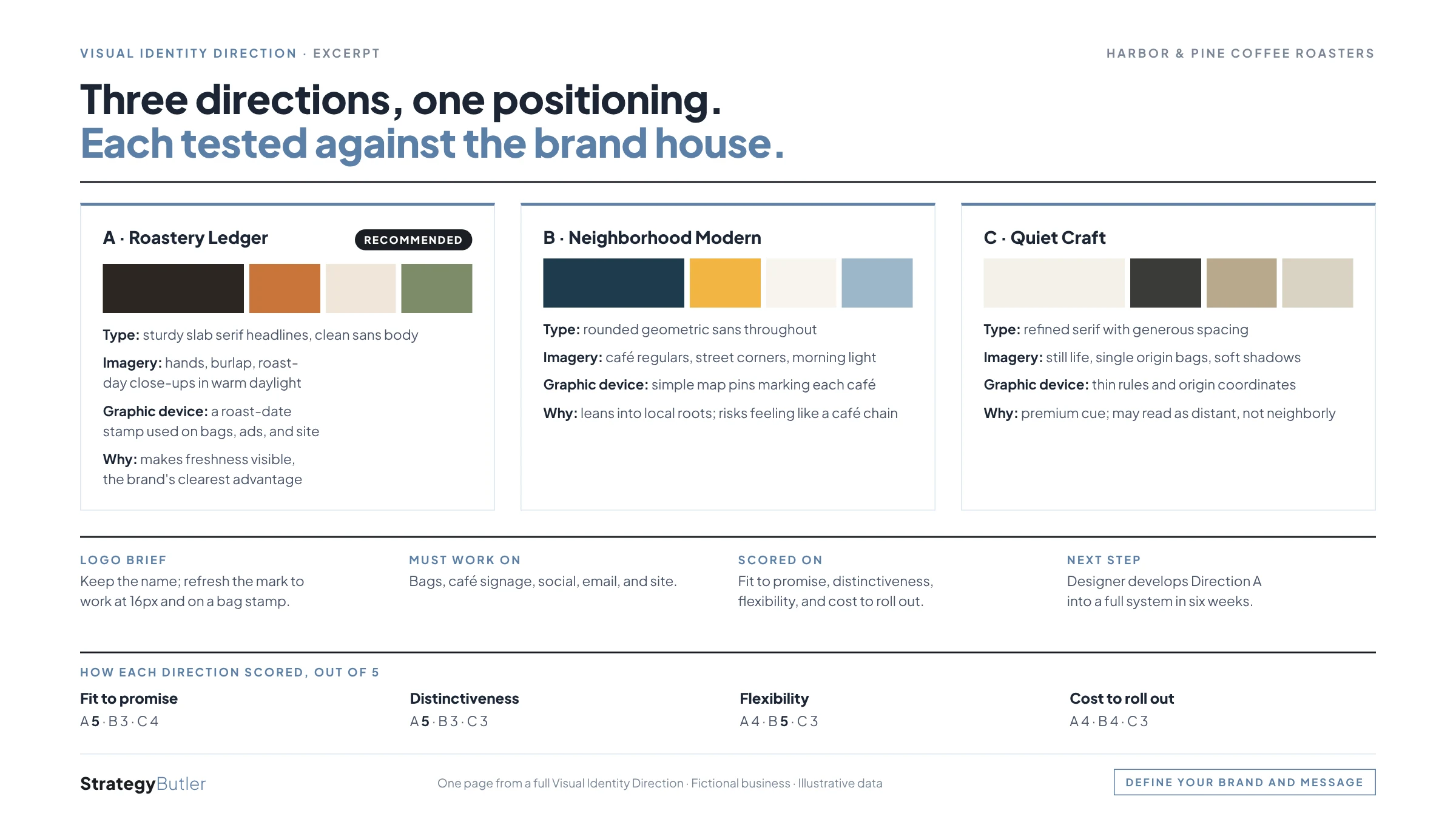
Two to three visual directions with palettes, type pairings, and mood boards, plus a logo and design brief.
Use it to
Brief a designer or agency with a clear, approved direction before production starts.
Answers
You receive
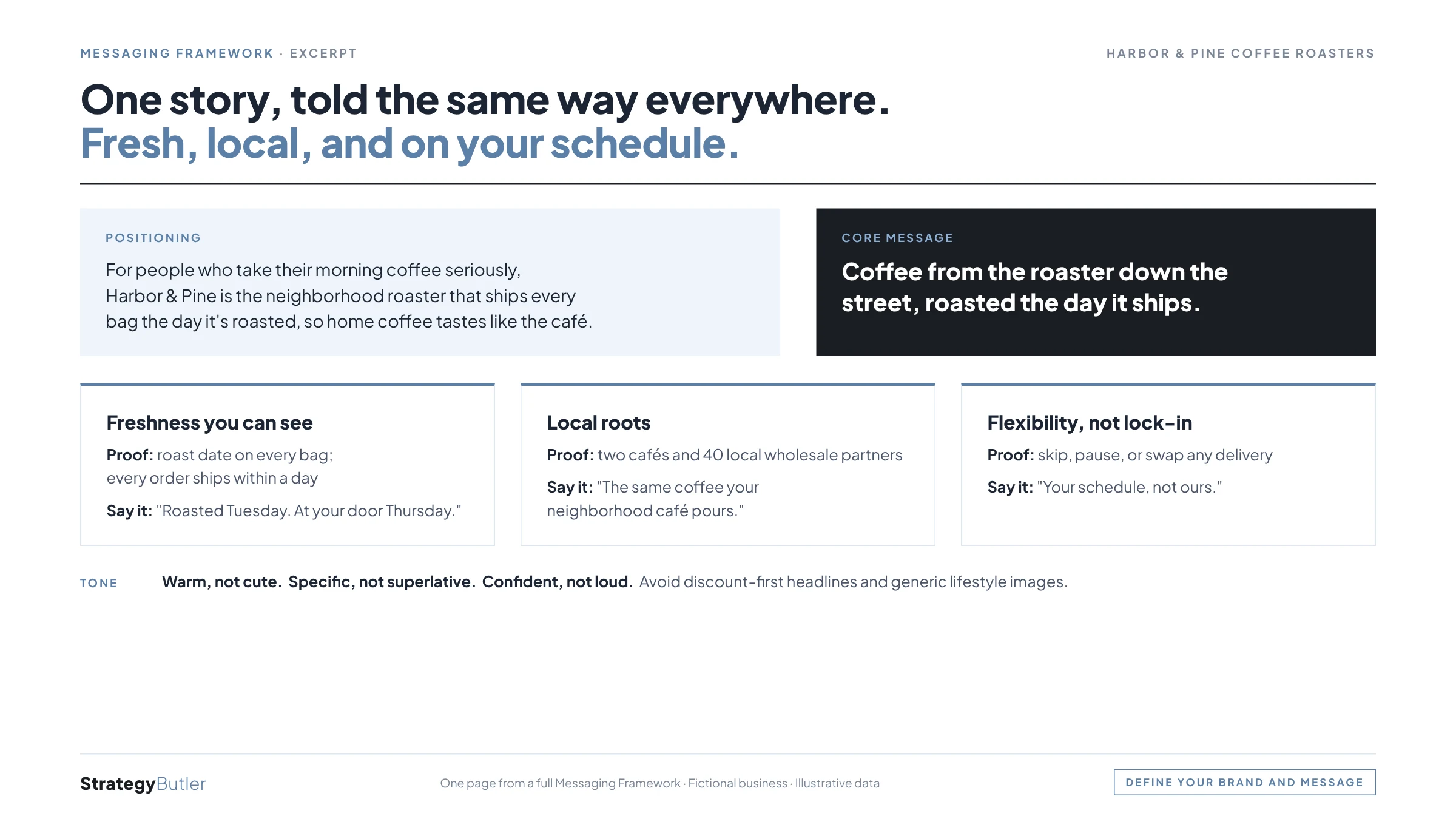
Positioning, core message, proof points, and tone, in one working document.
Use it to
Align your website, sales, and creative.
Answers
You receive
A brief your team, freelancer, or agency can work from directly.
Use it to
Get better creative, faster, with fewer rounds.
Answers
You receive
A touchpoint-by-touchpoint review with priority fixes.
Use it to
Close the gaps that dilute trust.

Spend with confidence
Where your money goes, what it returns, where to shift it, and how to keep your brand protected along the way.
Answers
You receive
A channel-by-channel read with grow, hold, and reduce recommendations.
Use it to
Reallocate budget with a clear rationale.
Answers
You receive
Narrative, objective, channel rationale, and success measures.
Use it to
Launch with a plan everyone agrees on.
Answers
You receive
A media brief with objectives, audiences, budget guidance, channel priorities, and success measures.
Use it to
Get stronger media plans from your agency or team, faster.
Answers
You receive
Criteria, questions to ask, a scoring structure, and a review of your programmatic and ad tech setup.
Use it to
Hire partners on substance, not the pitch.
Answers
You receive
Your risk posture, content guidelines, and platform controls.
Use it to
Protect reputation without over-blocking reach.

Lead and decide
Clear direction, the plan and budget behind it, and the team to deliver it.
Answers
You receive
Ranked priorities, with the reasoning behind each.
Use it to
Focus your team and your budget.
Answers
You receive
An annual or quarterly marketing plan with budget allocation, initiatives, timing, and KPIs.
Use it to
Run the year with a plan and budget leadership has already agreed to.
Answers
You receive
A plain-language read of your media and performance marketing efforts, from reach to cost per acquisition.
Use it to
Make decisions from data, not dashboards.
Answers
You receive
A leadership-ready narrative with forward guidance.
Use it to
Win alignment and budget.
Answers
You receive
A recommended team and partner model with roles, responsibilities, and a phased plan.
Use it to
Build a marketing function that runs well without constant oversight.
Every strategic marketing output is available at every level of engagement. In Essentials, this is your menu. In Advisor and Executive, the work is directed through conversation or led alongside your team.
03
Receive the work
One page from each output, shown for a fictional coffee roaster. Full outputs run many pages, customized to your business and set in your scope.
Understand your market
Competitive Snapshot
Understand your market
Audience Profile & Insights

Understand your market
Customer Journey & Channel Orchestration
Understand your market
Retention & Lifetime Value Strategy
Understand your market
Data & Measurement Strategy
Define your brand and message
Brand Positioning & Brand House
Define your brand and message
Visual Identity Direction
Define your brand and message
Messaging Framework
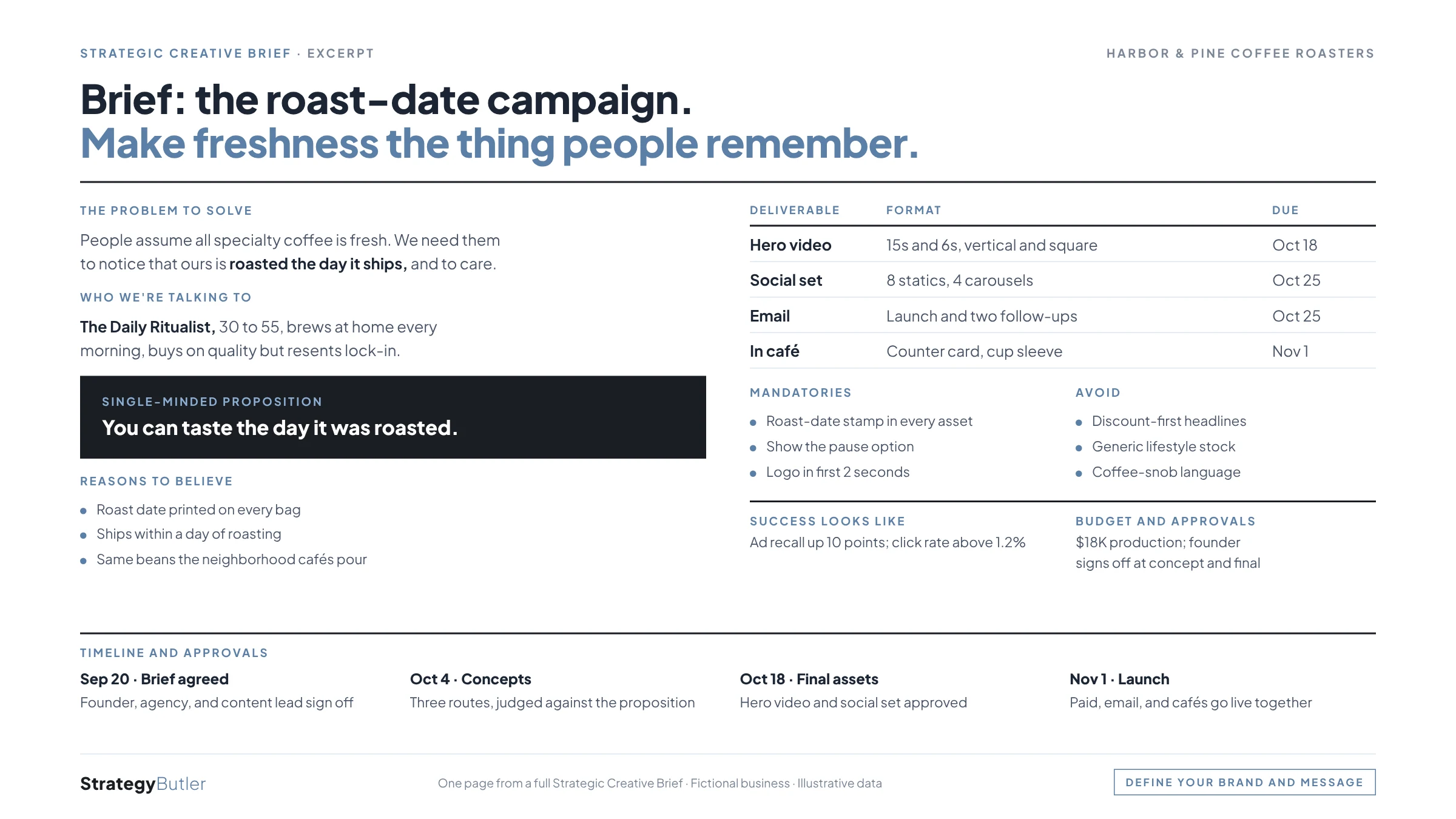
Define your brand and message
Strategic Creative Brief
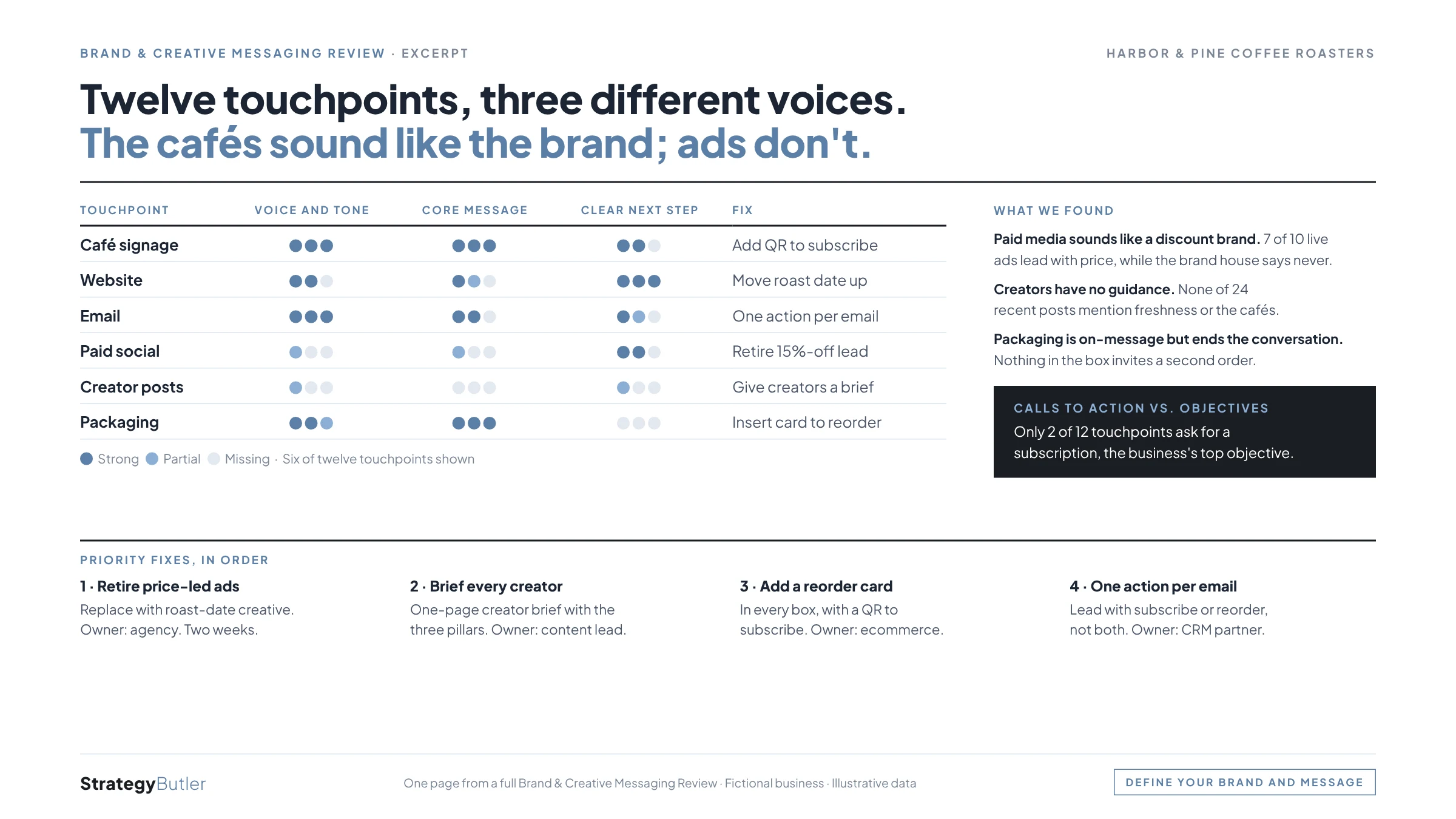
Define your brand and message
Brand & Creative Messaging Review
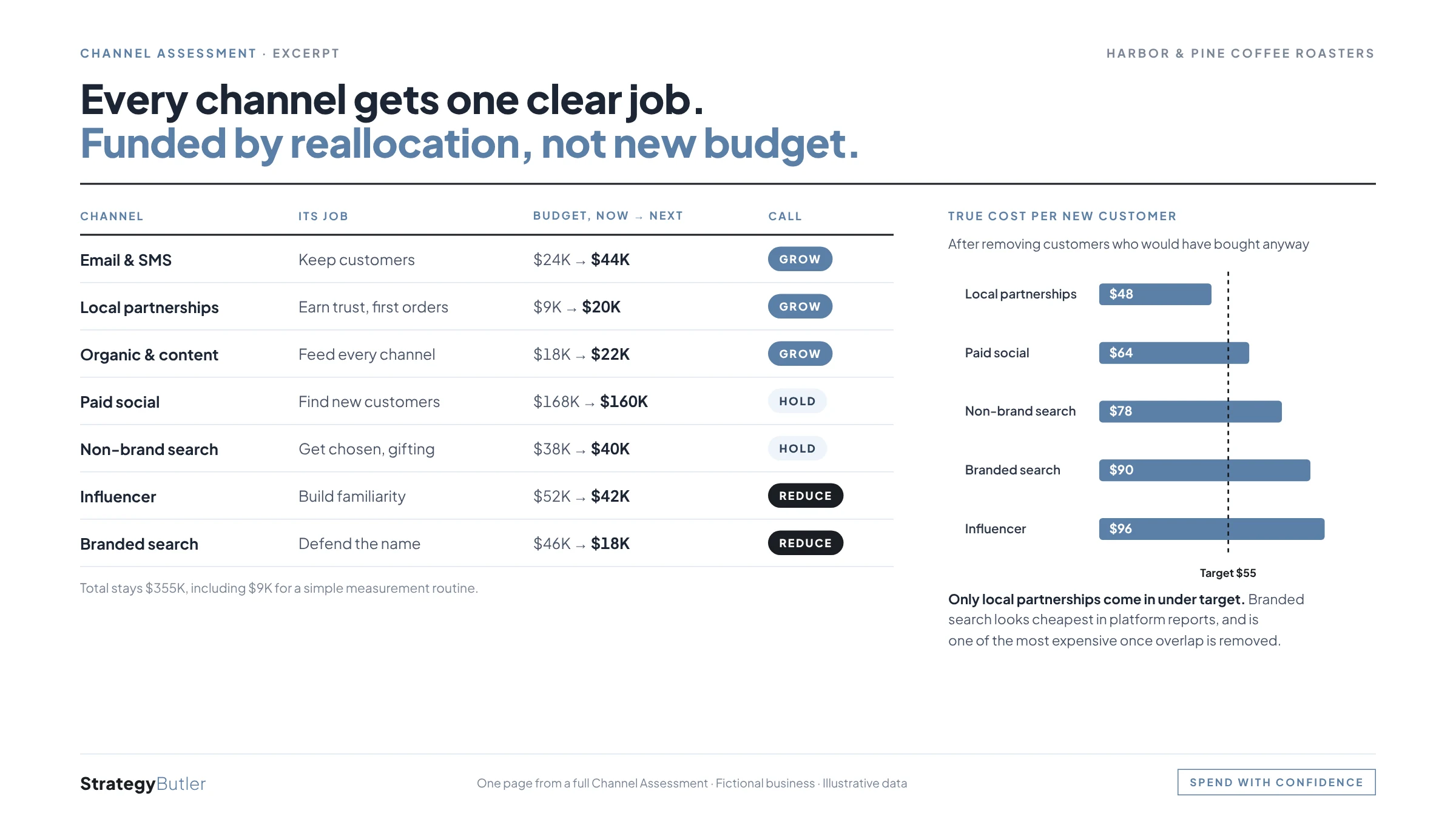
Spend with confidence
Channel Assessment
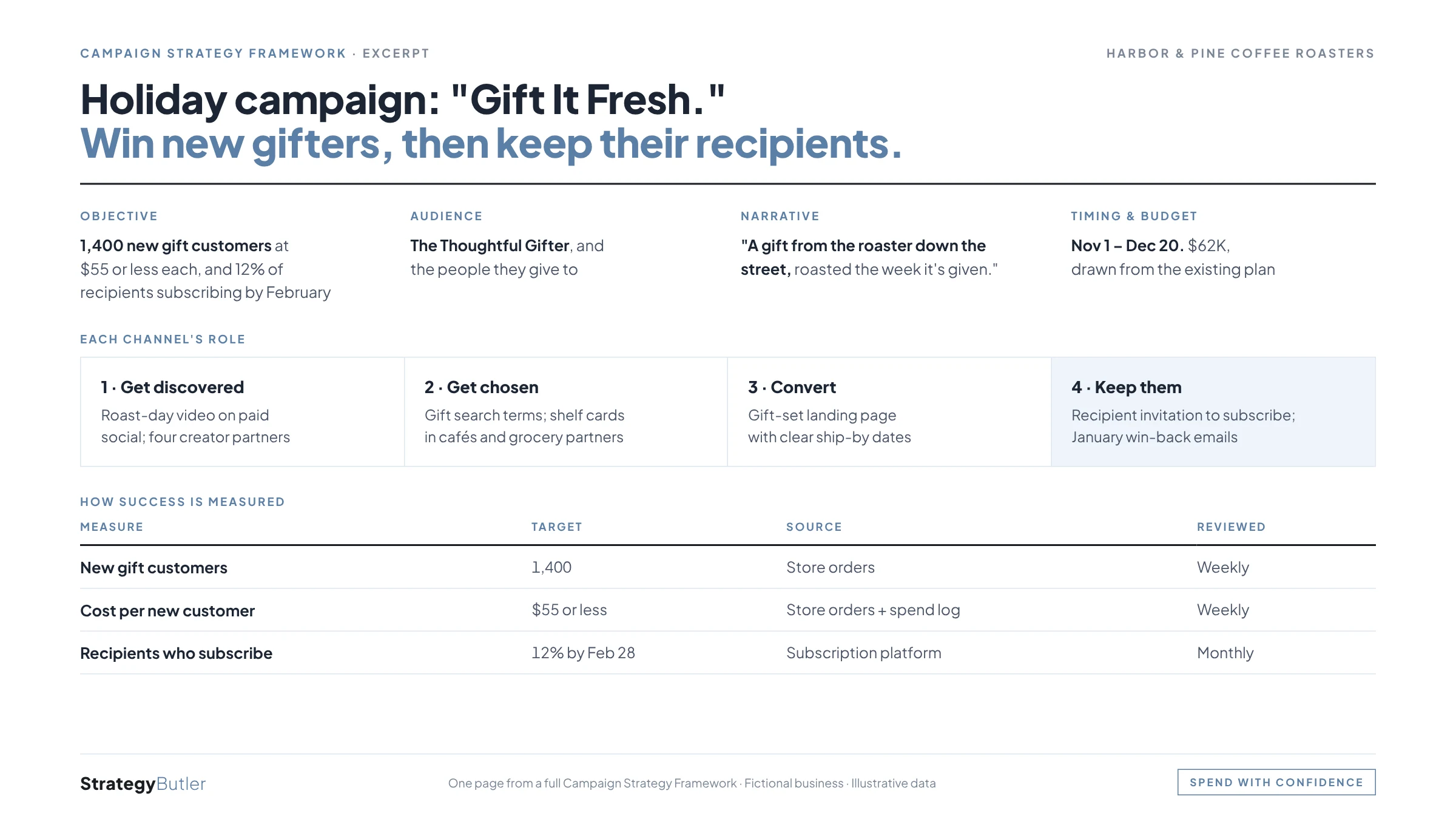
Spend with confidence
Campaign Strategy Framework
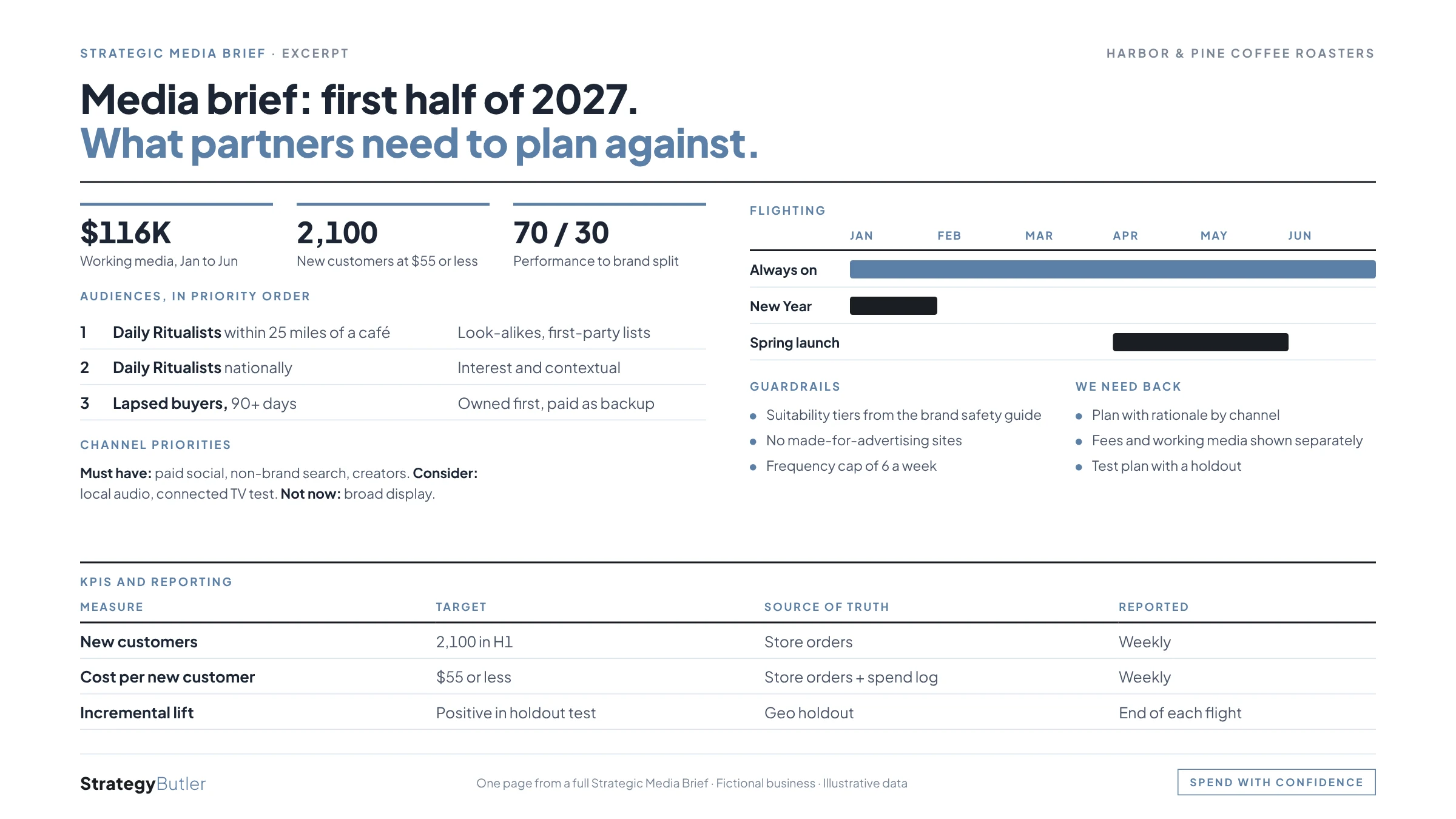
Spend with confidence
Strategic Media Brief
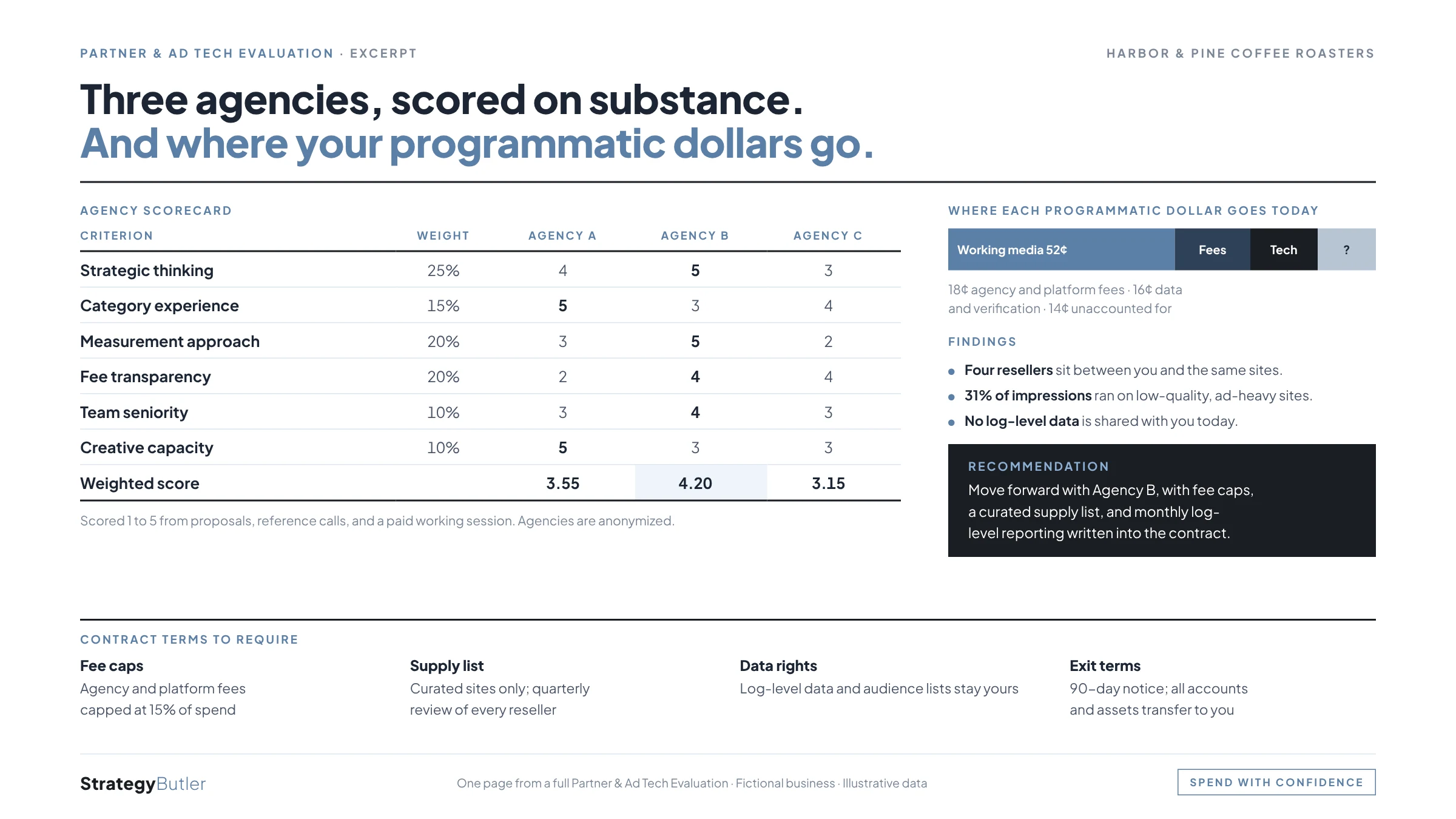
Spend with confidence
Partner & Ad Tech Evaluation
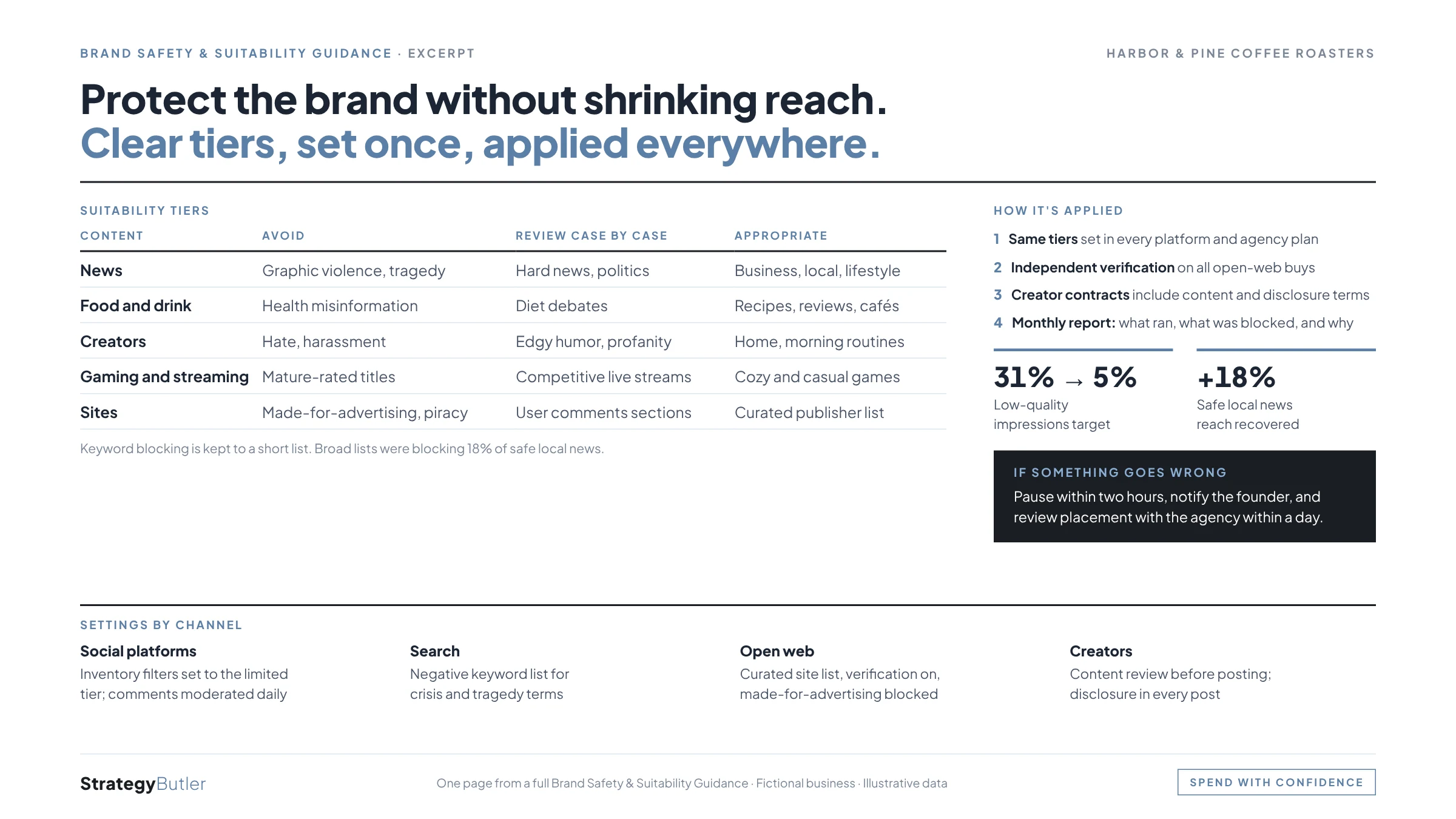
Spend with confidence
Brand Safety & Suitability Guidance
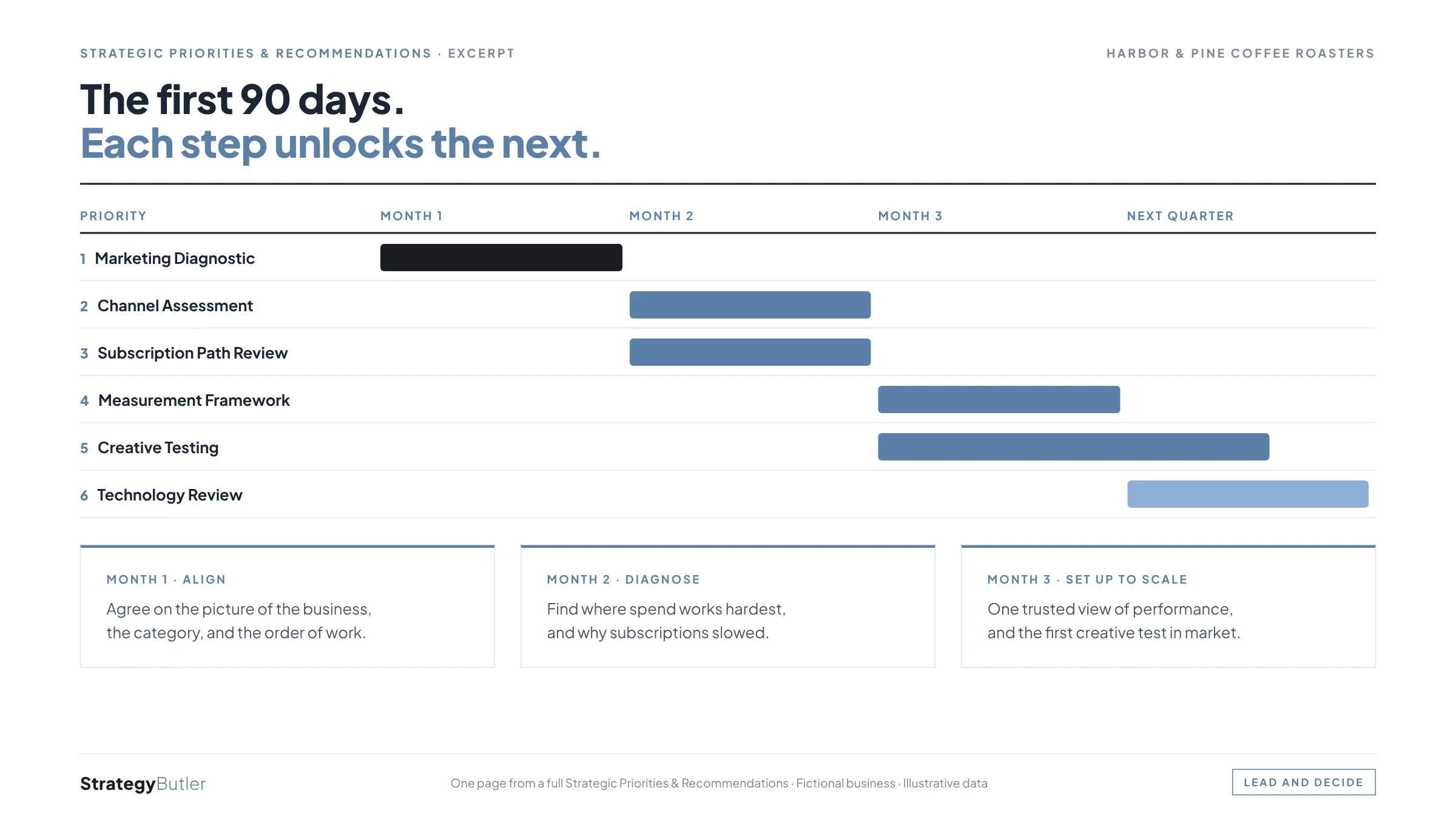
Lead and decide
Strategic Priorities: 90 Days
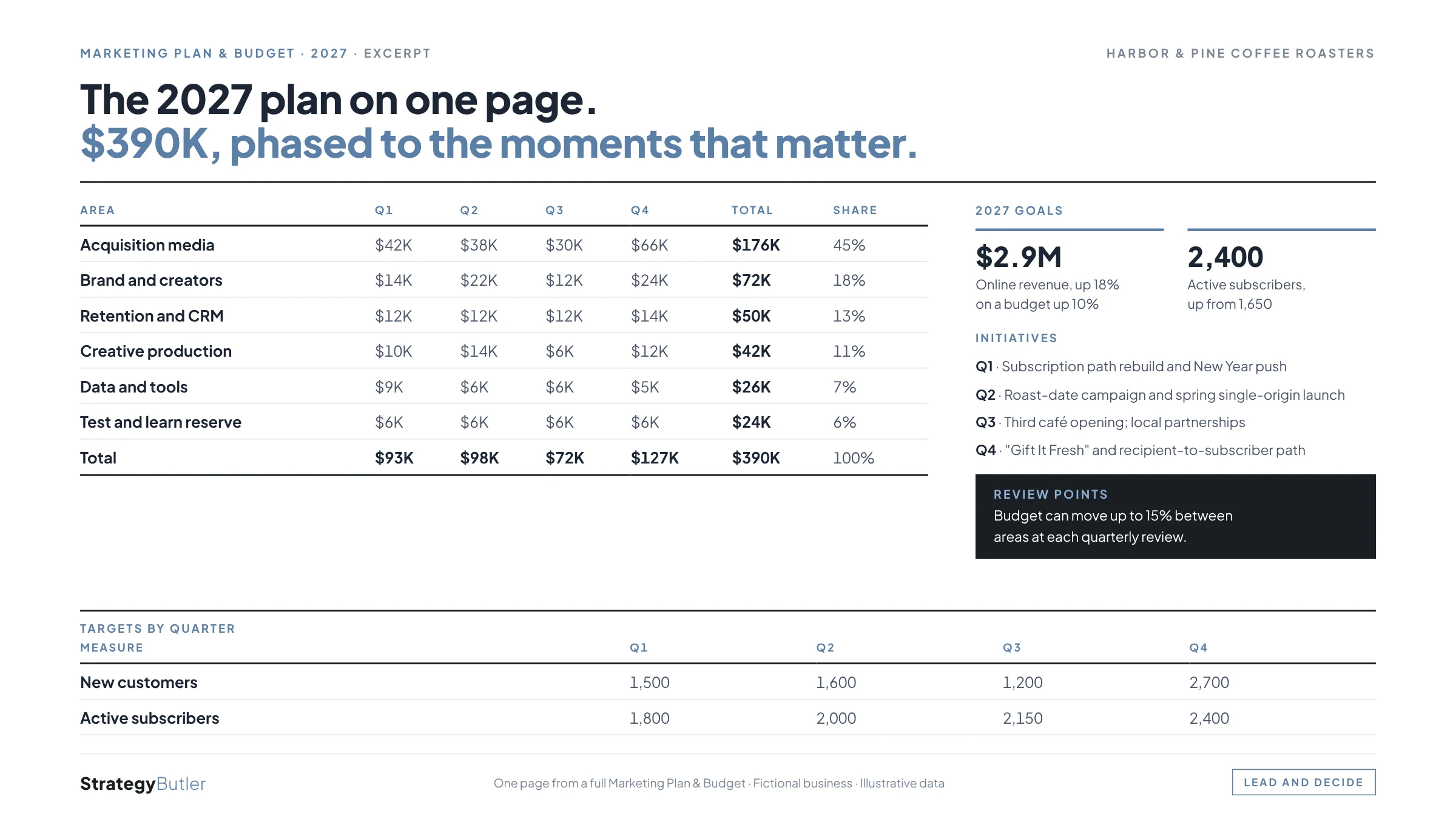
Lead and decide
Marketing Plan & Budget
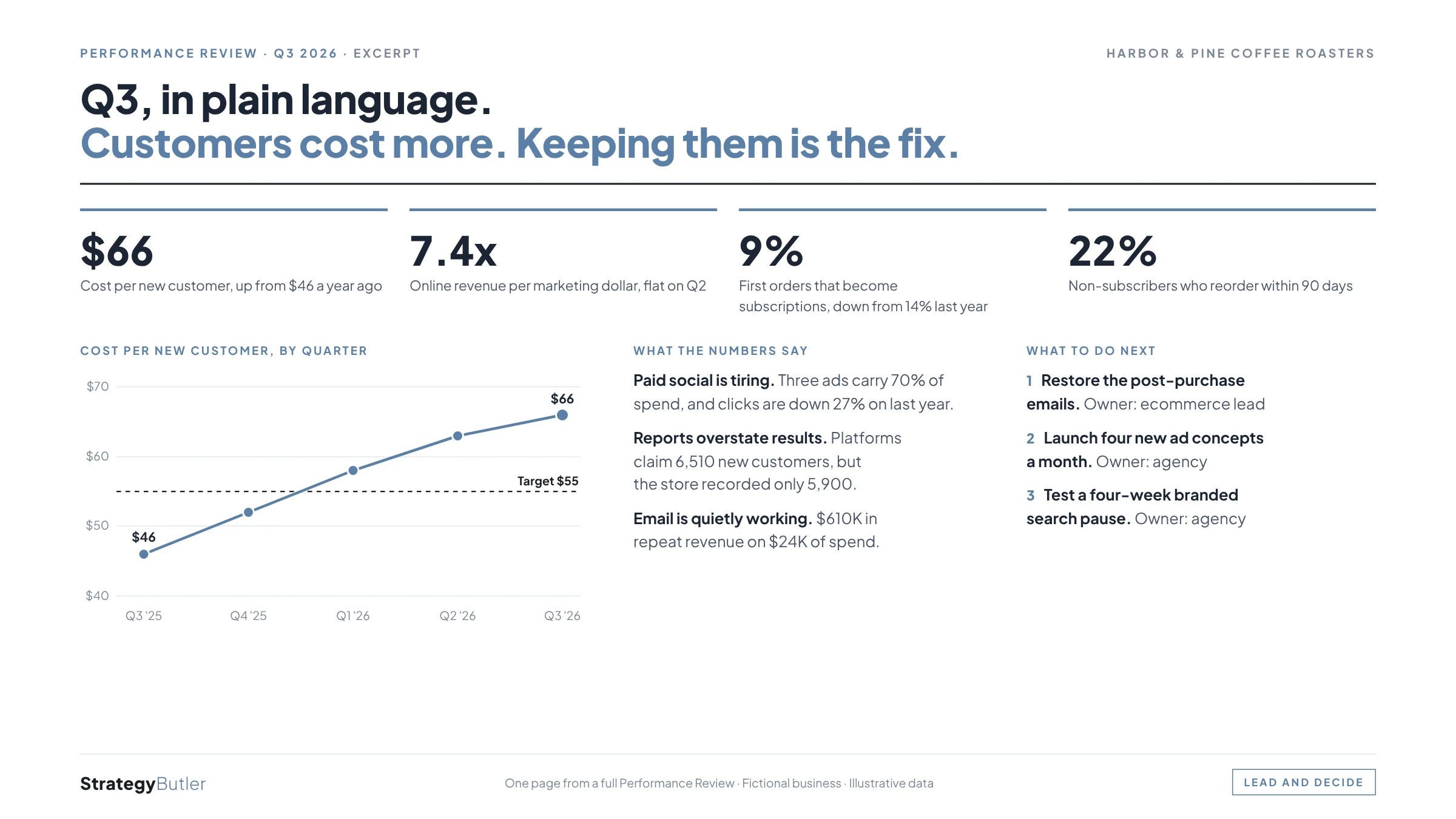
Lead and decide
Performance Review
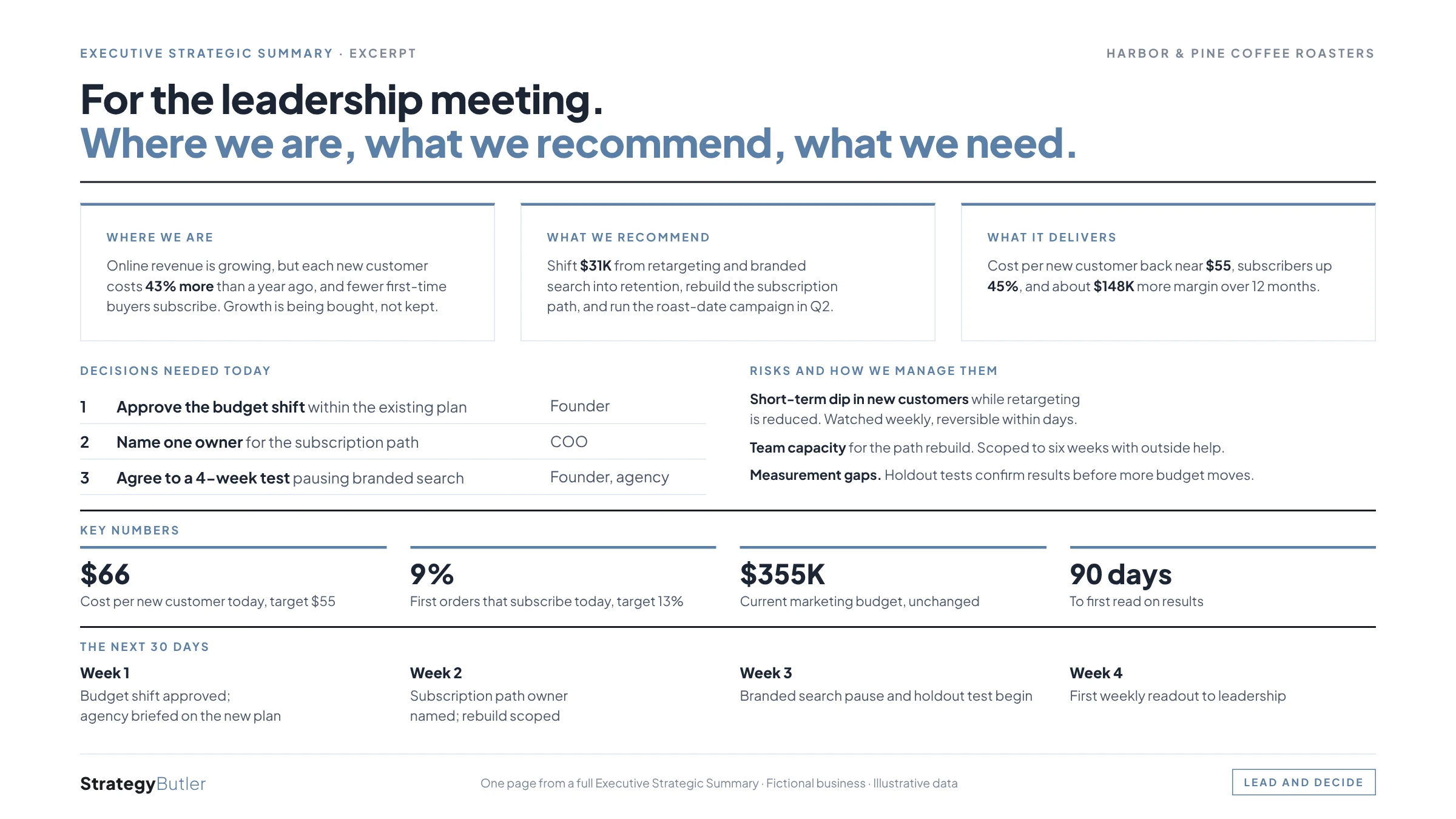
Lead and decide
Executive Strategic Summary
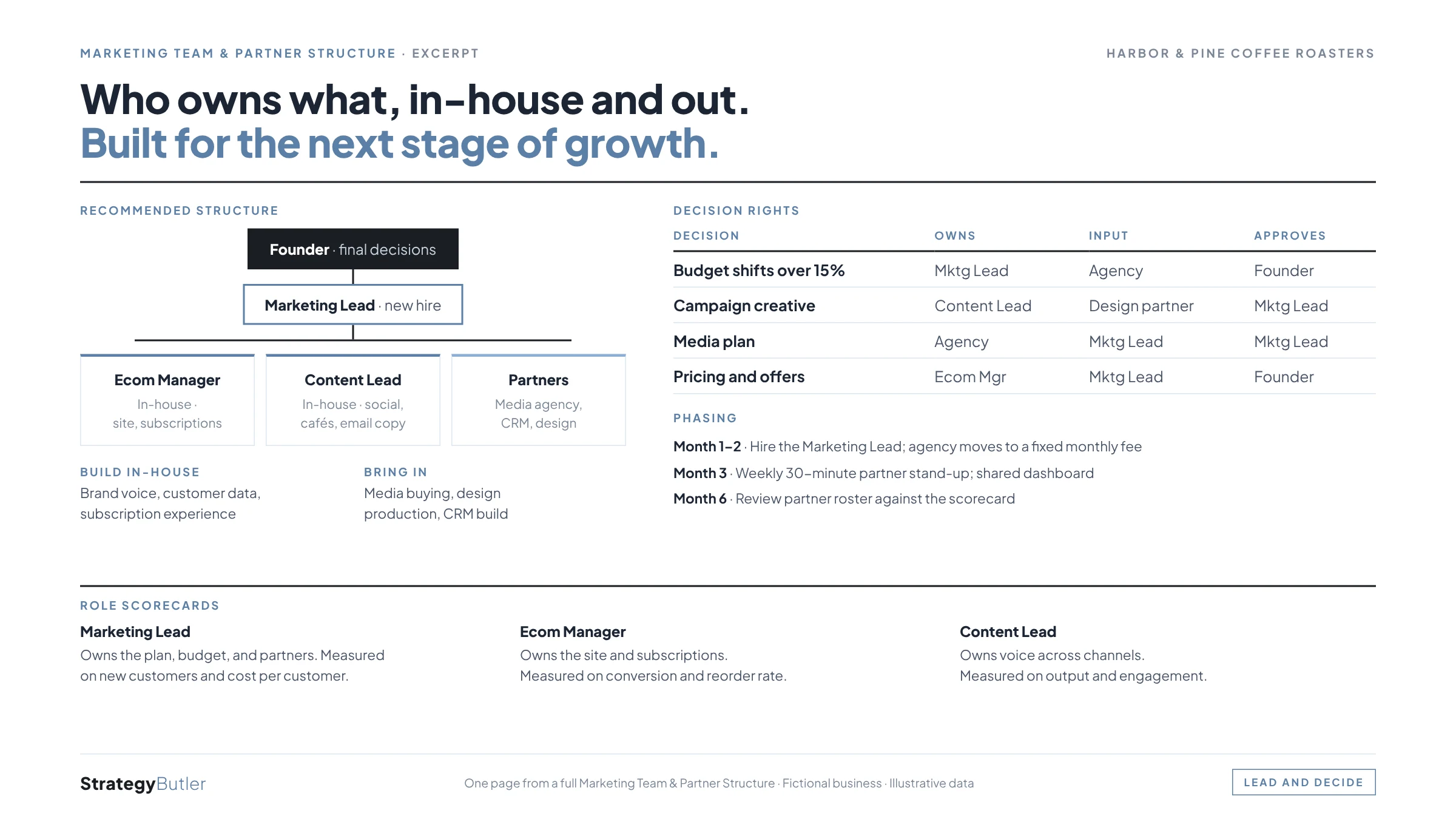
Lead and decide
Marketing Team & Partner Structure
Swipe to see every sample →
Select any page to enlarge.
04
Every piece reviewed
Nothing reaches you until the executive leading your engagement has reviewed and approved it.
Built on your questionnaire and what we learn together, never generic advice.
No jargon, no padding. Clear recommendations you can act on.
No media, no markups, no partner incentives behind any recommendation.
05
How it builds
Tier 1 · Essentials
Start with the Marketing Diagnostic, or a one-time onboarding. Then choose from the menu whenever you need support, through a short written brief. Everything is delivered in writing, with no calls required.
Best when you want senior work without the meetings.
Tier 2 · Advisor
A multi-month engagement that begins with the Marketing Diagnostic. From there, strategy conversations decide what gets developed, so you have senior judgment in real time, not only in writing.
Best when decisions come up faster than plans.
Tier 3 · Executive
A multi-month engagement that begins with the Marketing Diagnostic. From there, fractional CMO leadership, team oversight, or defined strategic projects, set in your Statement of Work.
Best when you need marketing led, not just advised.
About 3 minutes. We'll confirm the right fit and send the questionnaire. Nothing is committed until you accept your Service Agreement or sign your Statement of Work.

Senior marketing counsel, without the agency overhead.